
How to Move a Peloton Tread or Tread Plus: A Houston Fitness Equipment Specialist’s Guide
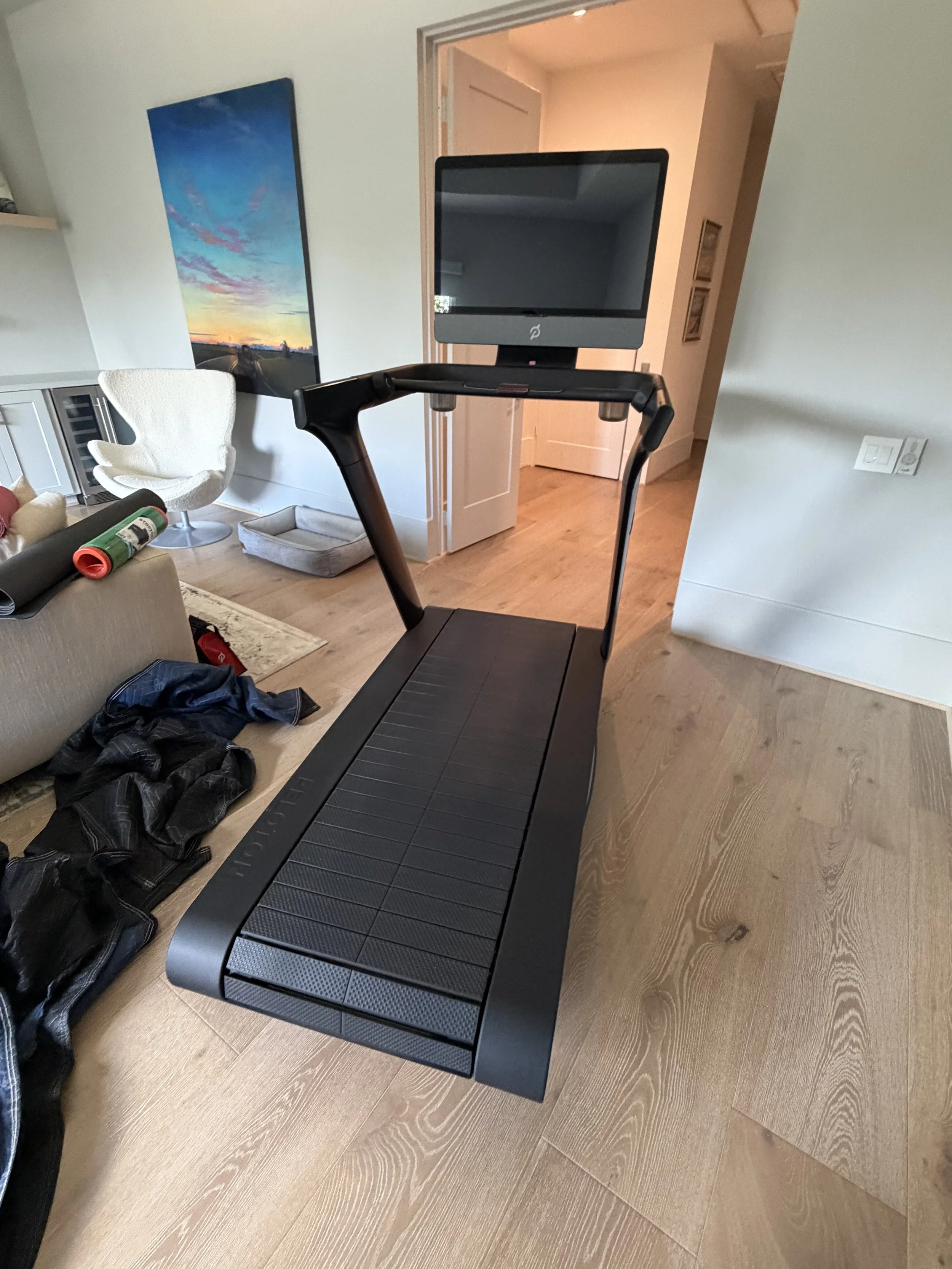
Peloton Tread Plus before relocation from a 2nd story home to a 1st floor garage.
Moving a Peloton Tread or Tread Plus can look pretty straightforward—until you actually have to move one.
A recent Houston customer told us they originally considered having a family member help move their Peloton Tread Plus in exchange for a six-pack. That might have been enough motivation for some of us in our early 20s. A few years later, though, the risk-to-reward calculation starts looking a little different—especially when several hundred pounds of treadmill and a flight of stairs are involved.
After talking with the seller about what it would actually take to move the Tread Plus, they reconsidered and called us instead.
That story gets at something I’ve carried with me since starting Houston Gym Assembly: brute force is fine and dandy, but brute force by itself isn’t a moving strategy.
When you muscle a heavy piece of equipment through an entire move, that force has to go somewhere. One bad shift can mean a damaged wall, scratched hardwood, a broken component—or someone getting hurt trying to keep several hundred pounds of equipment under control.
There’s no getting around the fact that moving heavy fitness equipment requires strength. But we believe that strength needs to be applied with intelligence and skill. That means understanding the equipment, controlling its center of gravity, knowing what should and shouldn’t be disassembled, planning the path before the equipment starts moving, protecting the home, and using the right tools and enough people for the job.
A successful Peloton move isn’t just one where the treadmill makes it from Point A to Point B. The equipment needs to make it there safely. The home needs to make it through without damage. The technicians need to make it through without injury. And when everything is put back together, the Peloton needs to work the way it did before the move.
That’s the standard we work toward on every relocation.
Because there’s a big difference between simply moving something heavy and properly relocating fitness equipment.
Experience Matters When Moving a Peloton Tread or Tread Plus
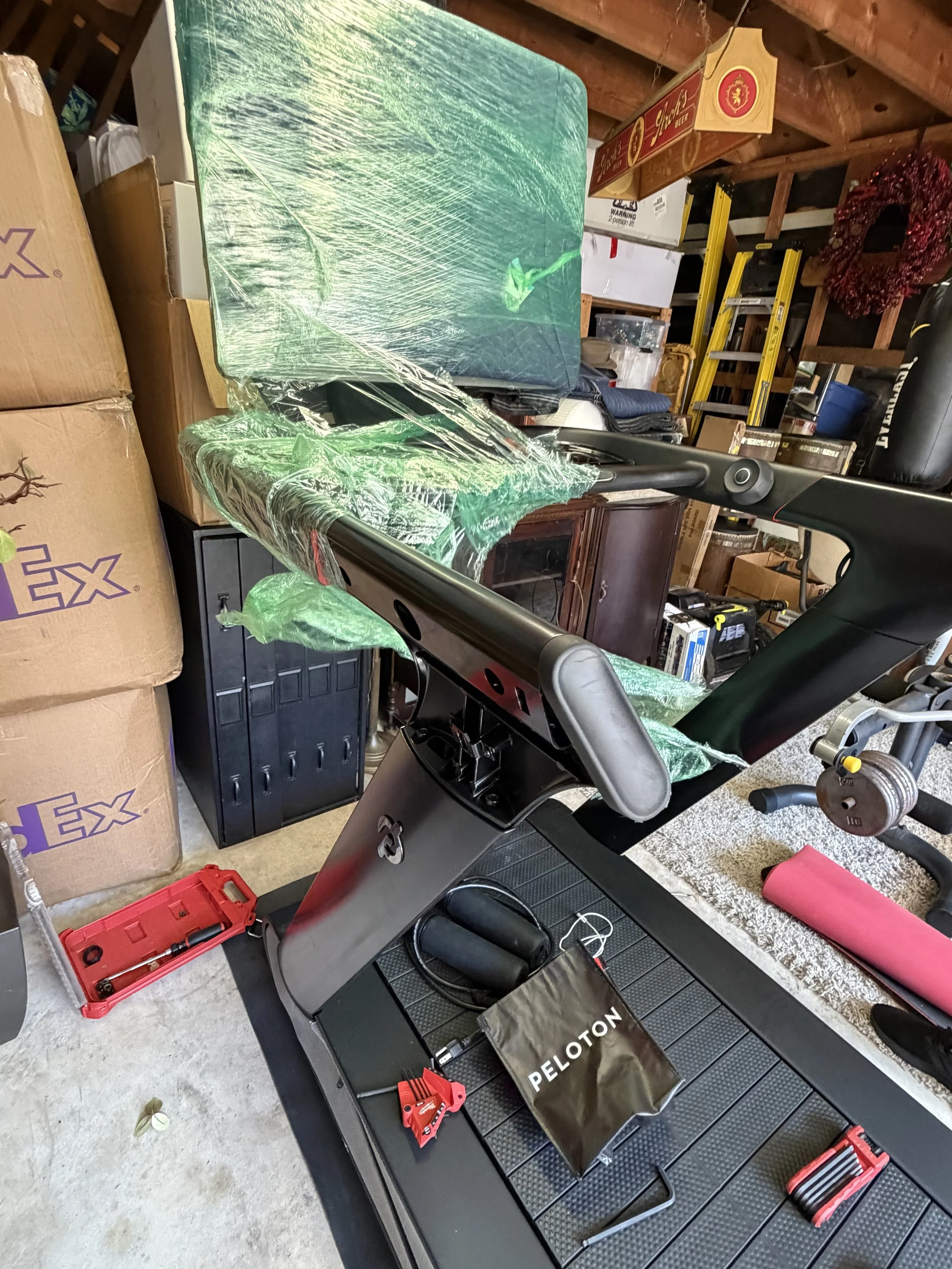
Peloton Tread Plus being reassembled after a 2nd floor to garage relocation.
At Houston Gym Assembly, fitness equipment isn’t one of many things we move—it’s what we specialize in.
We regularly disassemble, move, and reassemble treadmills and other fitness equipment across the Houston area — including the Peloton Tread and Tread Plus — moved between homes, through apartments and elevators, and up and down stairs.
That experience changes the way we approach a move.
We’re not just trying to figure out how to make the treadmill smaller so we can get it through a doorway. Before disassembly begins, we want to know how the machine is operating. We test it, look over its condition, and document what we see before we start taking anything apart.
During disassembly, we pay attention to how the machine is put together, its wiring and connections, the components being removed, and anything that may need attention during reassembly. We also document the process so we have a reference when the equipment reaches its destination.
Then there’s the move itself. The treadmill is only one part of what we’re protecting. Floors, walls, staircases, railings, door frames, elevators and other areas along the path matter too. A treadmill arriving without a scratch doesn’t mean much if the move leaves damaged hardwood or a hole in the wall behind it.
Once the equipment reaches its destination, we reassemble it, inspect our work, and test it again. The goal is not simply to say, “We got it upstairs.”
The goal is to leave the customer with a properly reassembled Peloton that operates as expected, in a home that looks the same as it did before we arrived.
Can You Move a Peloton Tread or Tread Plus Yourself?
Yes, in some situations. But whether you should depends heavily on which Peloton you have and where it needs to go.
A first-floor move with wide doorways, a short distance, and several capable people is very different from taking a Tread or Tread Plus down a staircase, around a landing, through a narrow doorway, loading it for transportation, and then doing it all again at the new location.
The first thing to understand is that you generally don’t want to approach a Peloton treadmill as one big object that simply needs enough people to carry it.
Proper disassembly can reduce the size and make the equipment more manageable, but you’re still left with a substantial treadmill base that has to be controlled throughout the move. With a Tread Plus in particular, that remaining weight is where many people realize this isn’t quite the same as moving a regular household treadmill.
Stairs change the equation even more.
Once several hundred pounds are on a staircase, strength alone isn’t enough. The people handling the equipment need to control its weight and center of gravity throughout the entire path. Landings, turns, railings, walls, hardwood steps and changes in elevation all have to be considered before the move starts—not once the treadmill is already halfway down the stairs.
And remember, getting it out is only half the job.
If you’re relocating the Peloton to another home, you’ll still need to transport it securely, get it into the new location, reassemble everything correctly, reconnect what was disconnected, and verify that the machine operates properly afterward.
So before attempting a Peloton move yourself, ask a better question than “Can we lift it?”
Ask:
Can we safely control it through the entire move, without damaging the Peloton, damaging the home, or hurting ourselves—and can we put it back together correctly when we’re done?
If the answer to all of those is yes, a straightforward DIY move may be reasonable.
If stairs, tight turns, limited manpower, or uncertainty about disassembly are involved, that’s usually where bringing in someone experienced with fitness equipment starts making a lot more sense.
Moving a Peloton Tread or Tread Plus Upstairs or Downstairs
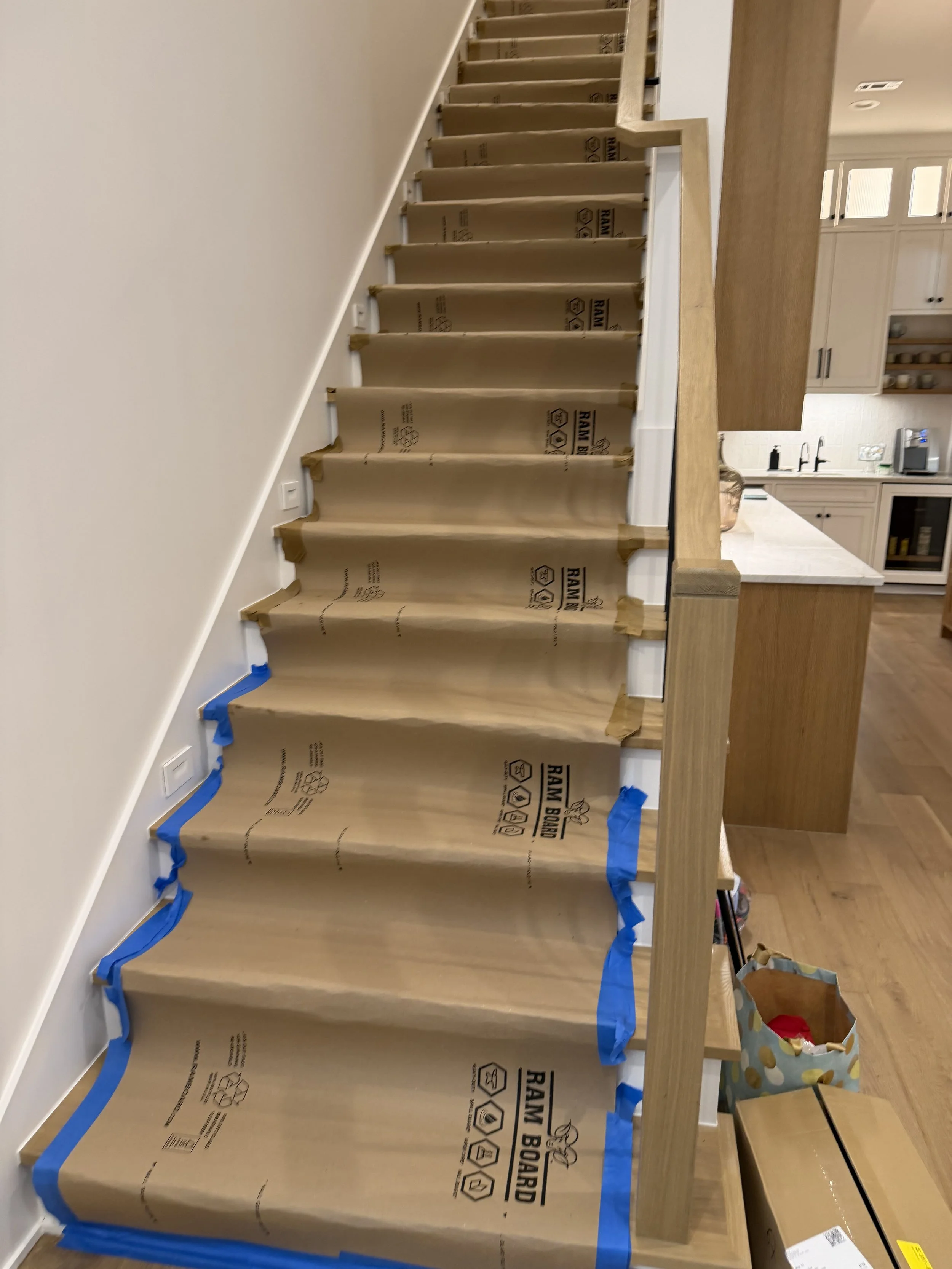
Hardwood staircase being protected before moving a Peloton Tread Plus upstairs.
Stairs are where a Peloton relocation becomes a very different job.
We’ve moved Peloton treadmills both upstairs and downstairs in Houston homes, and one thing experience teaches you quickly is that no two staircases are exactly alike. The treadmill may be the same, but the staircase rarely is.
Before we start moving anything, we look at the entire path. How wide are the stairs? Is there a landing? How much room is available to make the turn? Are there railings, low ceilings, light fixtures or doorways to work around? Are the stairs carpeted, hardwood or another finished surface that needs additional protection?
Then we determine how the Peloton needs to be prepared and how we’re going to control it throughout the move.
This is especially important with the Peloton Tread Plus. Even after components are removed, the remaining base is extremely heavy. Once that weight is positioned on a staircase, gravity is constantly working against you.
Going downstairs isn’t simply a matter of keeping the treadmill from falling. Going upstairs isn’t simply a matter of pushing harder.
The equipment needs to remain controlled throughout the entire trajectory of the staircase—including the transition onto and off the stairs and any turns or landings along the way. This is where the right equipment, positioning, communication and experience become much more important than brute strength alone.
We also think about what happens if something doesn’t go exactly according to plan. A safe approach should give the crew the ability to stop, maintain control and reposition when necessary. You don’t want the only thing preventing several hundred pounds of treadmill from moving somewhere it shouldn’t to be someone’s grip strength.
Protecting the Staircase Matters Too
Getting the Peloton upstairs without damaging it is only part of a successful move.
Hardwood stair treads can be scratched or dented. Walls and corners can be damaged during turns. Railings, trim and flooring at the top and bottom of the staircase can all become contact points if the equipment isn’t properly controlled.
That’s why we look at the Peloton and the home as one project.
The best stair move isn’t the one that looks the strongest. It’s the one that looks controlled.
When the equipment reaches the other end, the Peloton should be intact, the home should be intact, and the people who moved it should be intact too.
Testing a Peloton Before and After a Move
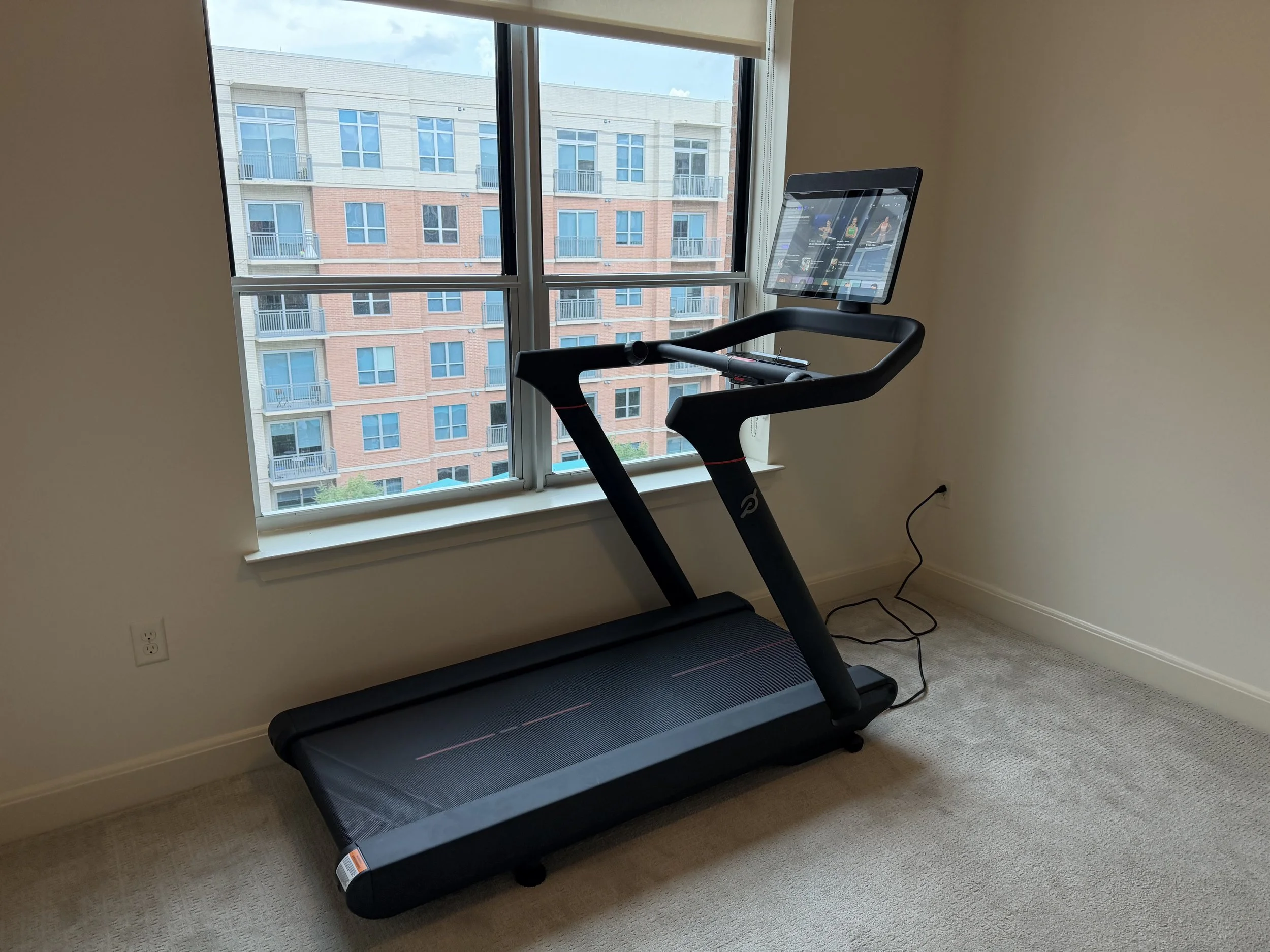
Peloton Tread being tested after high-rise apartment relocation.
A successful Peloton move doesn’t end when the treadmill reaches its new room. It ends when the equipment is reassembled, tested and functioning as it should.
Whenever possible, we test the treadmill before beginning the disassembly process. We want to know that it powers on, runs properly and that the basic functions we’ll check again after the move are working before we touch anything.
We also document the condition of the equipment before and throughout the relocation. This creates a baseline for both our technicians and the customer and can help identify anything that was already present before the move.
This matters more than you might think. Treadmills can already have noises, worn components, cosmetic damage, error messages or other issues that may have nothing to do with the relocation. Finding and documenting something before disassembly is much better than everyone trying to determine afterward when it happened.
Once the Peloton reaches its new location, we reassemble it and repeat our functional checks. We want to confirm that the machine operates as expected after everything it just went through.
What If My Peloton Gets Damaged During the Move?
We’ve had customers ask us some version of this question before: “If something happens to my treadmill, are you going to buy me a new one?”
It’s an understandable concern. Peloton treadmills are expensive, and so are many of the homes we move them through.
Rather than making a blanket promise about what happens after something goes wrong, we think the better answer is to explain what we do to help prevent that situation in the first place.
That starts before the treadmill moves an inch.
We evaluate the equipment and the path it needs to travel. We determine how much disassembly is necessary, use a crew appropriate for the move, protect vulnerable components and surrounding surfaces, and plan how the weight of the machine will remain controlled throughout the relocation.
If transportation to another home is involved, the same level of care continues outside the house. The treadmill needs to be protected, loaded and secured appropriately for transportation—not simply placed in the back of a truck and driven to the next location.
At the destination, we reverse the process carefully. The equipment is unloaded, moved into position, reassembled and tested again.
We’re also an insured business, but we don’t view insurance as a substitute for careful work. The ideal outcome isn’t figuring out how to handle a damage claim after something goes wrong. It’s completing the relocation without needing one.
That’s why our process is built around prevention, documentation and verification from beginning to end.
For us, the move isn’t complete simply because the Peloton made it upstairs or arrived at the new house.
It’s complete when the equipment is where it belongs, the property has been protected, and the treadmill has been reassembled and tested.
Who Is Actually Moving Your Peloton?
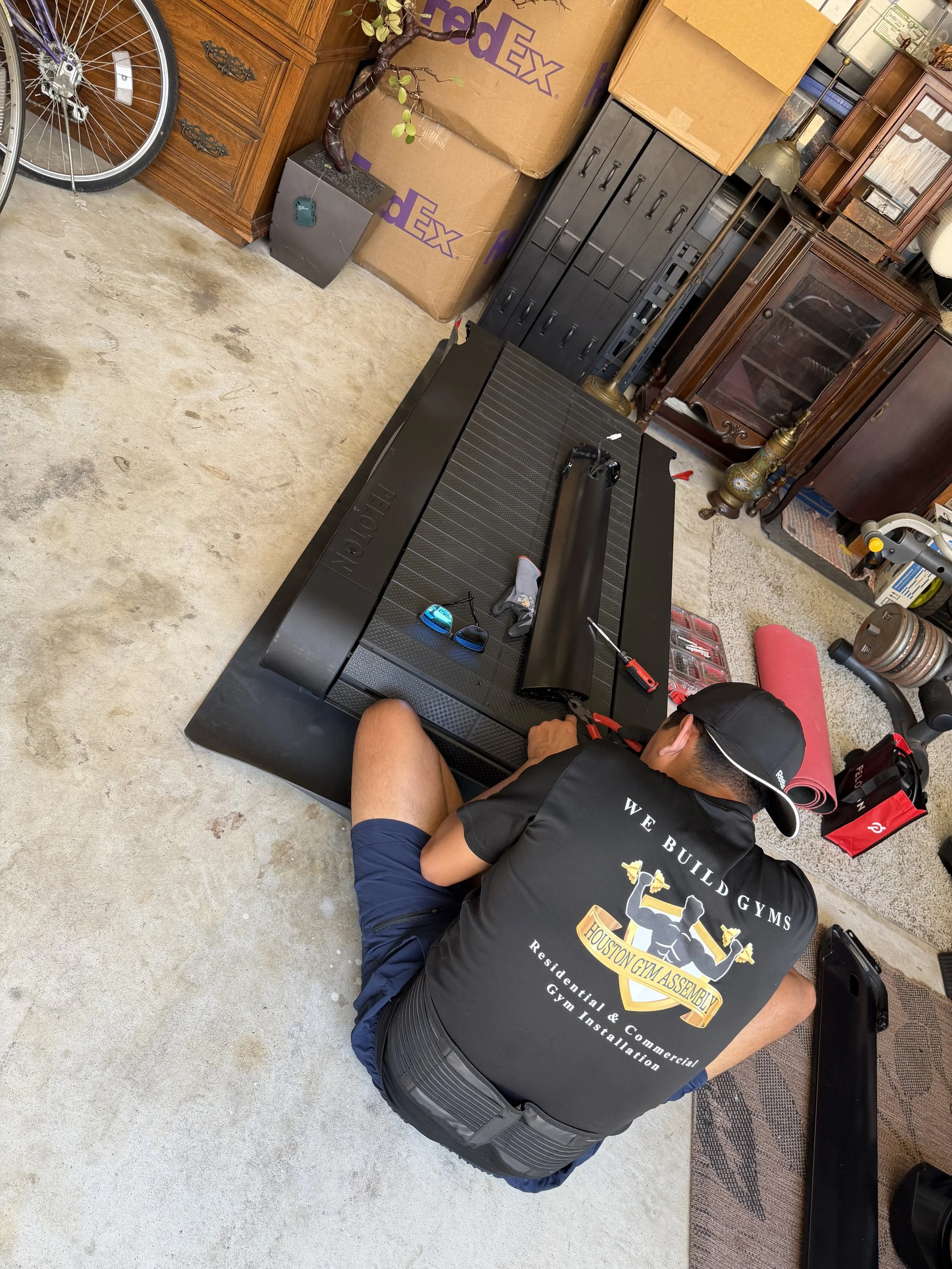
Houston Gym Assembly technician reassembling a Peloton Tread Plus after relocation from 2nd floor to 1st floor garage.
Another important question when comparing fitness equipment movers is one that many customers may not think to ask:
Who is actually coming to my home to do the work?
A company can advertise fitness equipment installation and moving services in Houston without necessarily having its own local fitness equipment technicians in Houston.
In some business models, the company you contact handles the sales and scheduling process while the actual work is assigned to an independent contractor or another local service provider.
From the customer’s perspective, the experience can initially look exactly the same.
You search for fitness equipment movers in Houston, call a company, explain what equipment you have and where it needs to go, receive a quote and schedule the job.
What may not be obvious is what happens after you hang up the phone.
If the company doesn’t have its own local crew, it still has to find someone in Houston to complete the project. That can mean reaching out to local contractors and service providers—including some of the same companies that appear when you search for fitness equipment movers yourself.
We know this because we’ve received those calls too.
Ask Who Will Actually Be Doing the Work
Subcontracting itself doesn’t automatically mean you’ll receive poor service. There are excellent independent technicians and contractors in many industries.
The important distinction is knowing who has been selected to work on your equipment, what experience they have, and who is ultimately responsible for the project.
A technician who regularly disassembles, moves and reassembles Peloton treadmills and other fitness equipment approaches the job with experience from previous moves.
Someone who is mechanically capable and comfortable using tools may still be a very different choice if this is their first Peloton Tread+.
And you may not know the difference when you schedule the appointment.
That becomes particularly important when the job involves a several-hundred-pound machine, stairs, expensive flooring, tight clearances or significant disassembly.
Price Can Affect Who Is Available to Perform the Work
There is another part of the subcontracting model worth considering.
The amount you pay the company isn’t necessarily the amount being paid to the person who arrives at your home.
The company arranging the project has to retain a portion of the price for its own operation, which means the actual service provider may be performing the work for substantially less than the amount on your invoice.
That doesn’t automatically determine the quality of the work. But it does create an important question for customers to consider:
Is the person moving my equipment being given the time and resources necessary to do the job properly?
When a technician has several appointments to complete or is working within a very tight budget for a project, there can be an incentive to finish quickly.
Our philosophy is different.
We would rather allow enough time for our technicians to stop, reassess a difficult turn, remove another component, add protection or ask for another set of hands than create an environment where rushing becomes the most profitable way to complete the job.
What Happens If Something Goes Wrong?
This is where knowing who you’re hiring becomes even more important.
If something is damaged during a move performed by a subcontractor, the person standing in your home may not actually work for the company you hired.
You may need to communicate with the company that sold and scheduled the service while that company communicates separately with the contractor who performed it.
That additional layer can make responsibility and communication more complicated.
Again, that doesn’t mean subcontracting is inherently bad. It simply means customers should understand the arrangement before trusting someone with expensive equipment and their home.
Before scheduling a fitness equipment move, consider asking:
Are the technicians coming to my home part of your local team, or is my job being subcontracted?
Do they regularly move this type of equipment?
Who is responsible for the work if something is damaged?
Who do I contact if there’s a problem after the technician leaves?
Those questions can tell you just as much about the service you’re buying as the price.
When You Call Houston Gym Assembly
When you contact Houston Gym Assembly, you’re contacting the local company responsible for your project.
We’re not accepting a job in another market and then searching for someone in Houston to perform it for us.
Fitness equipment is what we work with every day. The people planning the project understand the type of work our technicians will be performing, and the technicians arriving at your home are there to complete the move according to our process—not simply because they were the available contractor who accepted the assignment.
That distinction matters to us because accountability shouldn’t disappear once the appointment has been scheduled.
From the first conversation through the final equipment test, we want to know who is handling your equipment, how it’s being handled and who is responsible for the result.
What About NordicTrack, Ellipticals and Other Cardio Equipment?
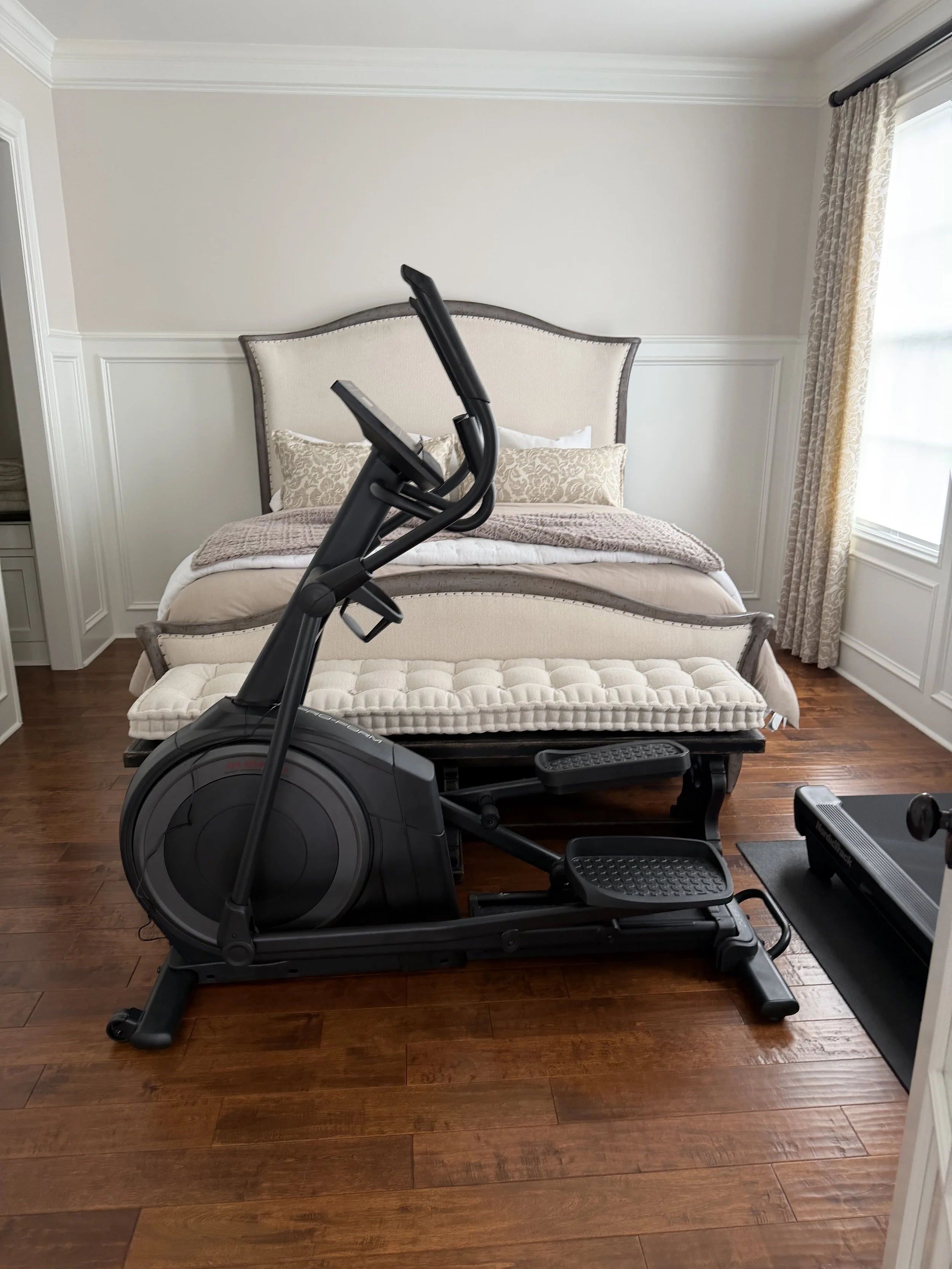
Pro-Form Elliptical relocated to a home in The Woodlands.
Peloton treadmills aren’t the only pieces of cardio equipment that can become surprisingly complicated when it’s time to move them.
We regularly receive calls from customers who need help relocating NordicTrack treadmills, ellipticals, stair climbers, exercise bikes and other residential and commercial cardio equipment.
While the equipment may be different, many of the same principles apply.
Treadmills
Large treadmills from manufacturers such as NordicTrack, Precor and other brands can require partial disassembly before they can safely pass through doorways or navigate stairs.
Some models may look relatively manageable until you consider the size of the deck, console, uprights and overall shape of the machine.
And just like with a Peloton, the question isn’t simply whether the treadmill can be lifted.
It’s whether it can remain controlled throughout the entire path.
Ellipticals
Ellipticals present a different challenge.
They may not always weigh as much as the heaviest treadmills, but their long frames, moving arms and awkward shapes can make them difficult to maneuver through residential doorways, hallways and staircases.
In many cases, strategic disassembly can turn an awkward piece of equipment into something much safer and easier to control.
Stair Climbers and Other Heavy Cardio Equipment
Stair climbers can present their own challenges because of their weight, height and center of gravity.
Commercial cardio equipment can be even more demanding because it was often designed to remain in one place once installed—not to travel through residential hallways and staircases years later.
Regardless of the brand or type of cardio equipment, our approach remains the same:
Understand the machine. Understand the path. Disassemble what needs to be disassembled. Protect the equipment and property. Take the time necessary to move it safely. Then put it back together and make sure it operates as it should.
That’s the difference between simply moving something heavy and relocating fitness equipment.
What Does a Professional Peloton Move Look Like?
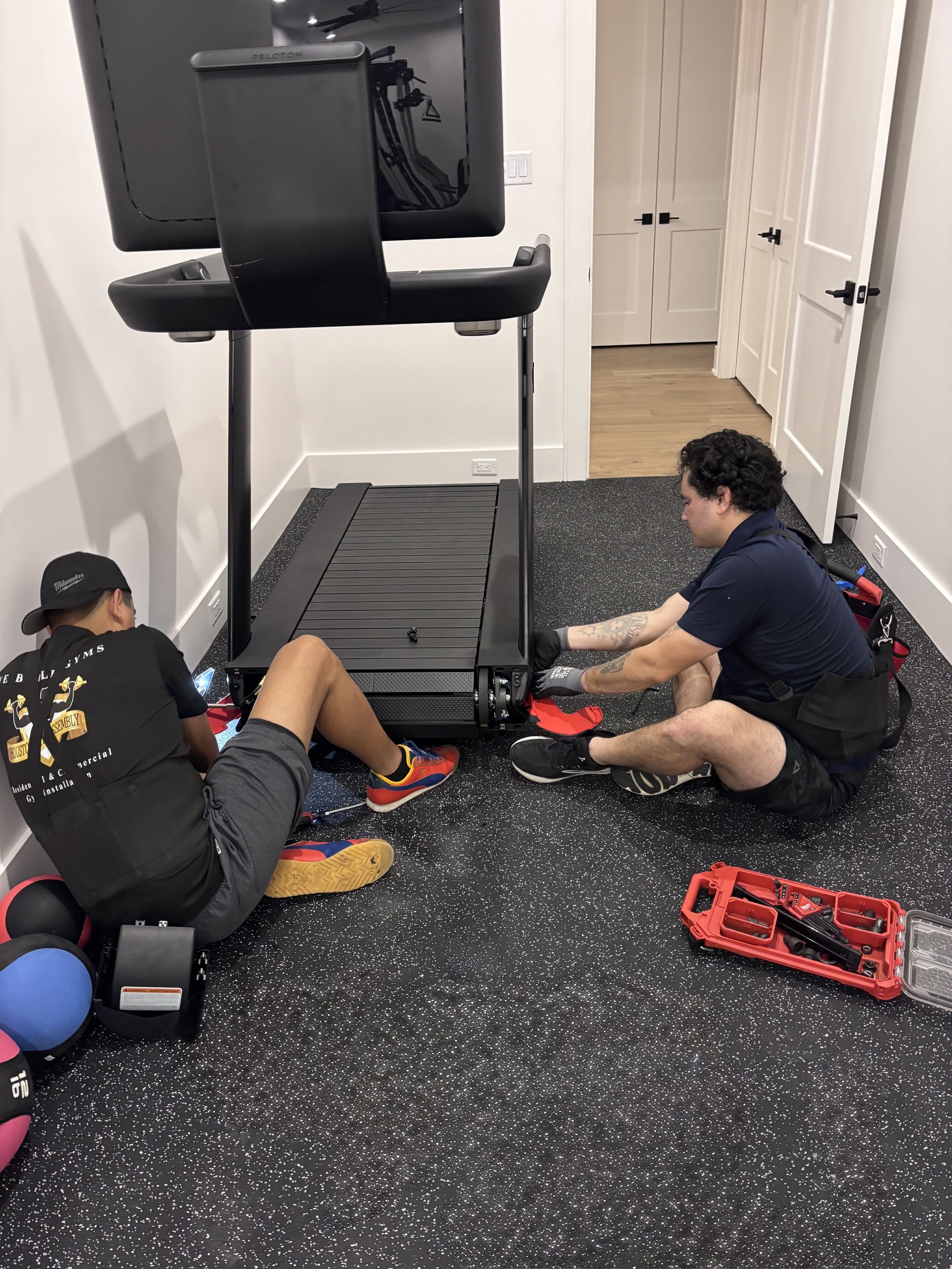
Houston Gym Assembly technicians reassembling a Peloton Tread Plus after a 2nd floor to 2nd floor home relocation.
Every Peloton relocation is a little different. A first-floor move across town isn’t the same project as moving a Tread+ from a second-floor bedroom, and the amount of disassembly and crew required can change depending on the equipment and the home.
But the overall process should be consistent.
1. Evaluate the Equipment and the Moving Path
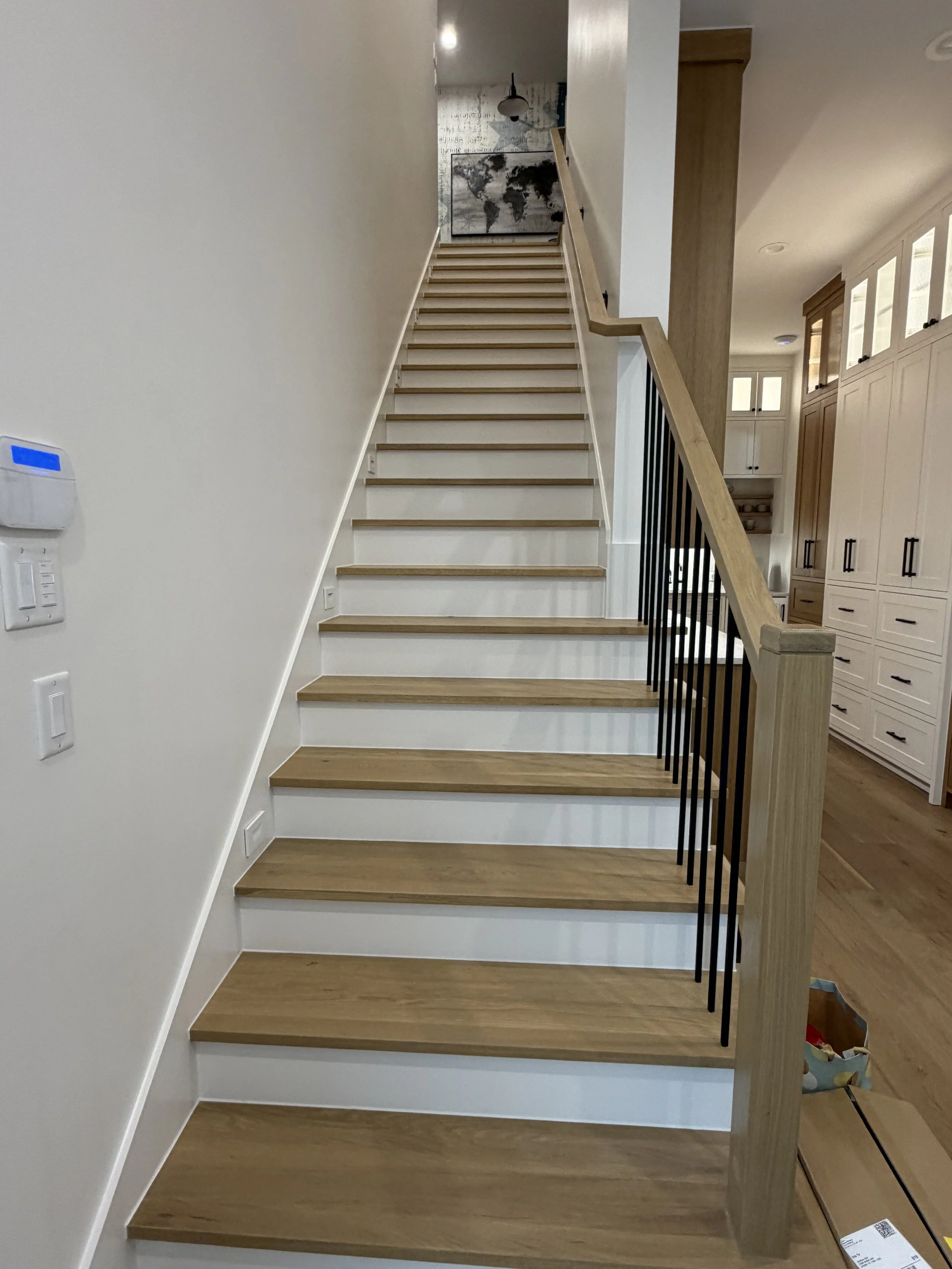
Hardwood floor staircase safety precaution evaluation before Peloton Tread Plus 2nd floor relocation.
The move starts before our technicians arrive.
We ask for information about the Peloton, its current location, the destination and any obstacles we should know about. Photos of staircases, landings, doorways and other tight areas can help us determine what the project may require before moving day.
Once we’re on site, we can confirm the path and make adjustments to the plan if necessary.
2. Test and Document the Peloton
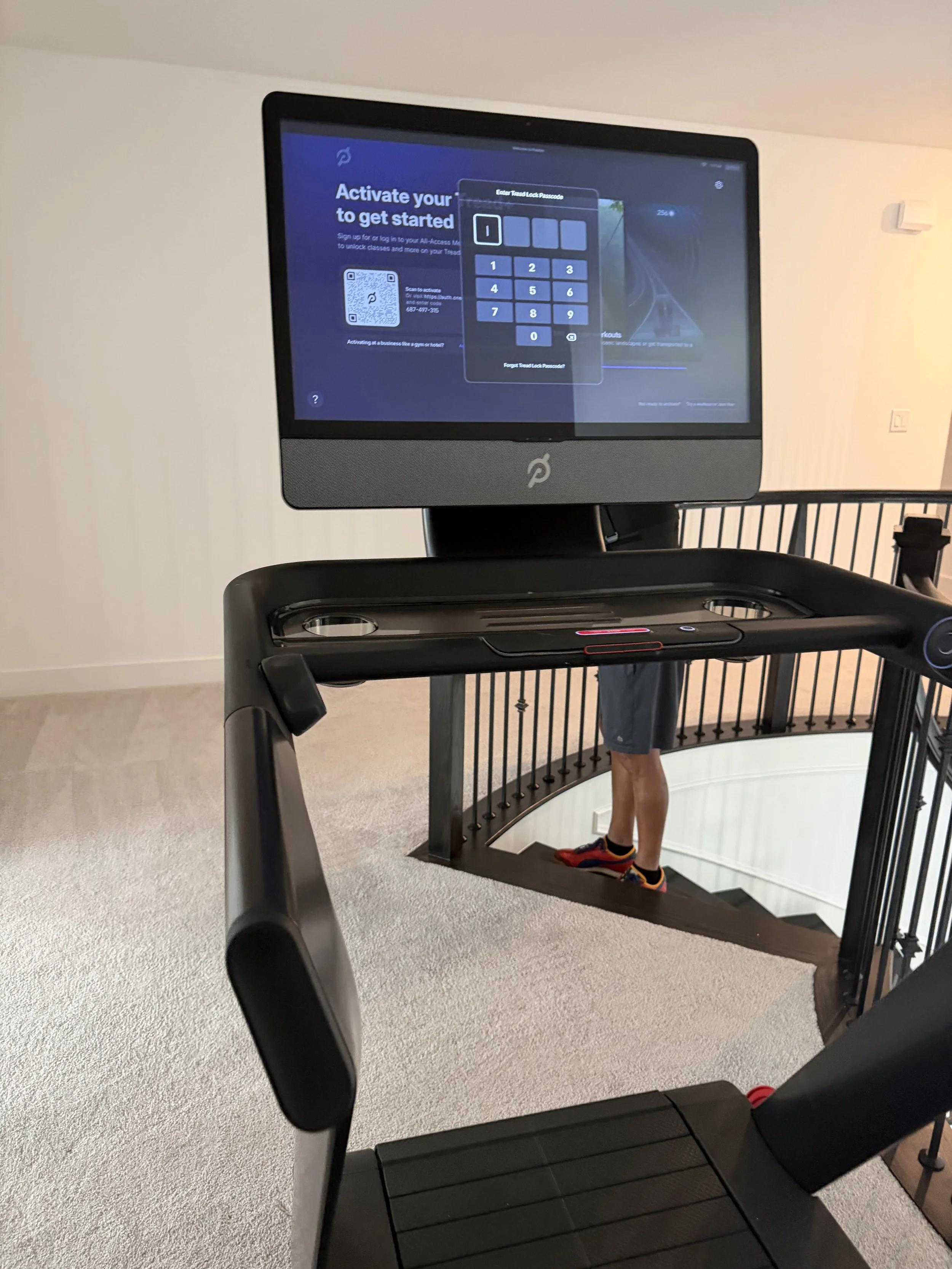
Testing a Peloton Tread Plus before a 2nd floor to 2nd floor home relocation.
Before disassembly, we document the condition of the treadmill and, whenever possible, perform a basic function test.
We want to establish how the equipment looks and operates before we begin working on it.
3. Disassemble What Is Necessary
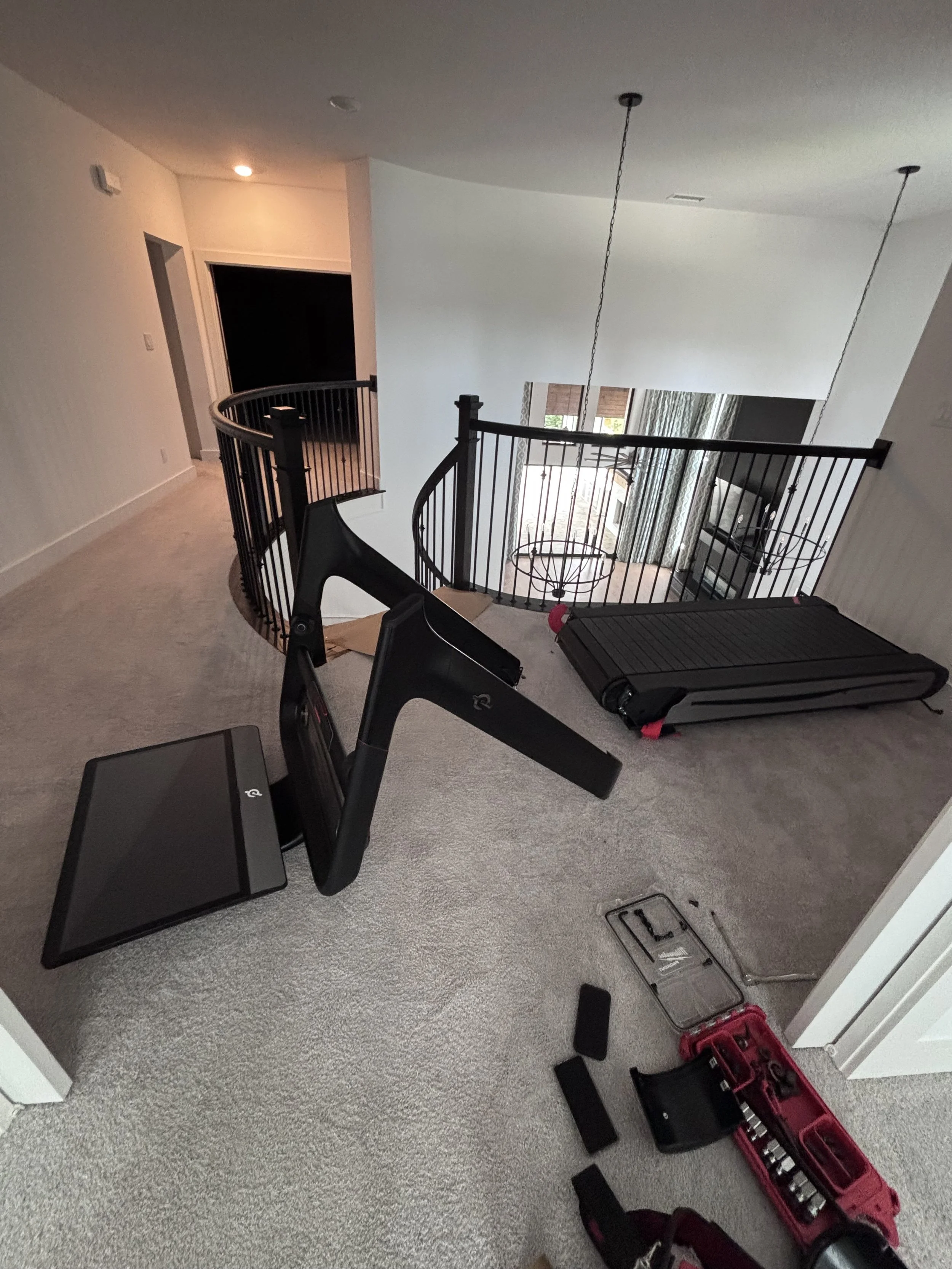
Peloton Tread Plus being disassembled before 2nd floor to 2nd floor relocation.
We don’t believe in taking apart equipment simply for the sake of taking it apart.
The amount of disassembly depends on the Peloton model and the path it needs to travel.
The goal is to create a configuration that allows our technicians to safely control the equipment while keeping the project organized for reassembly at the destination.
4. Protect the Equipment and the Property
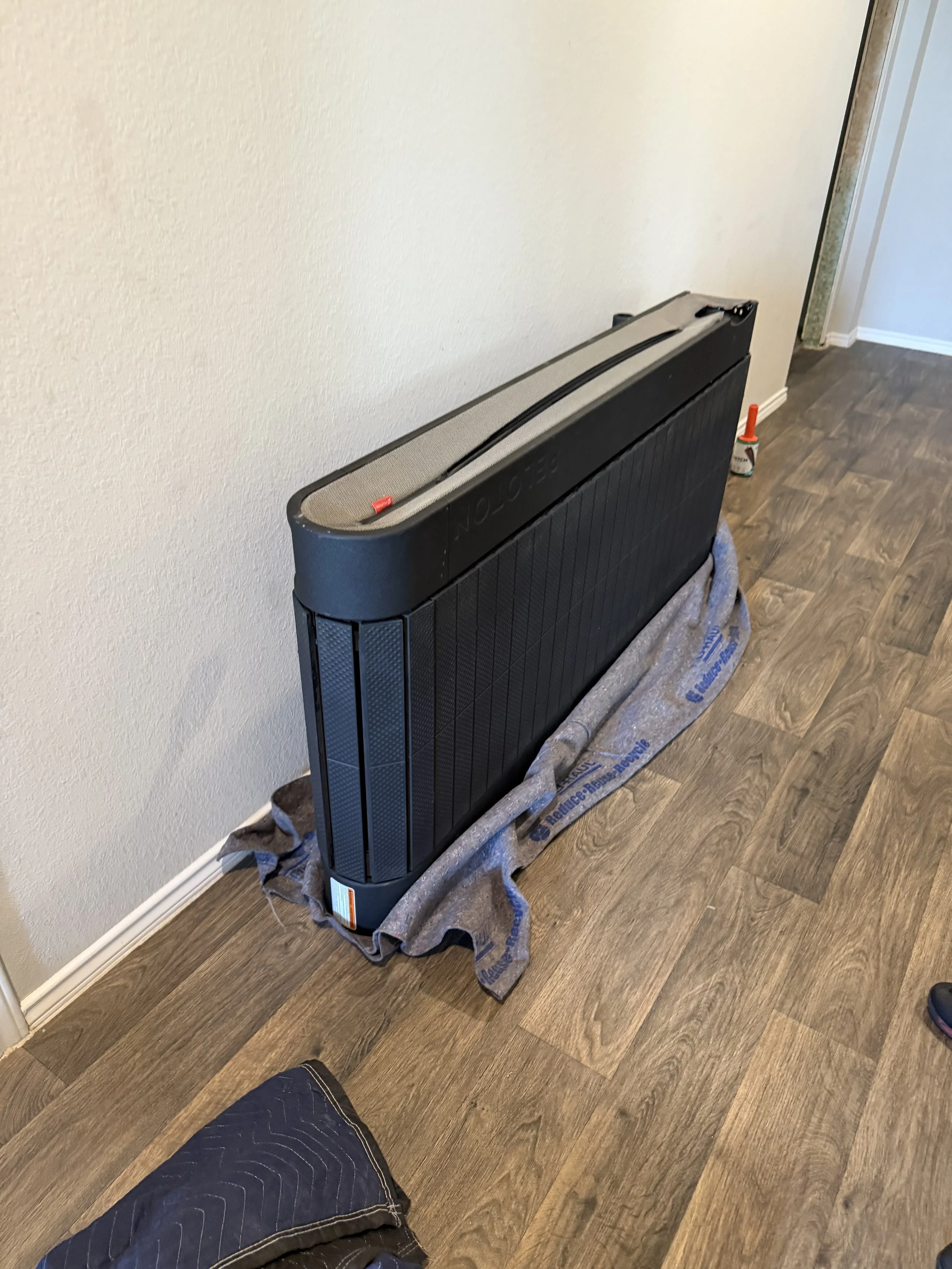
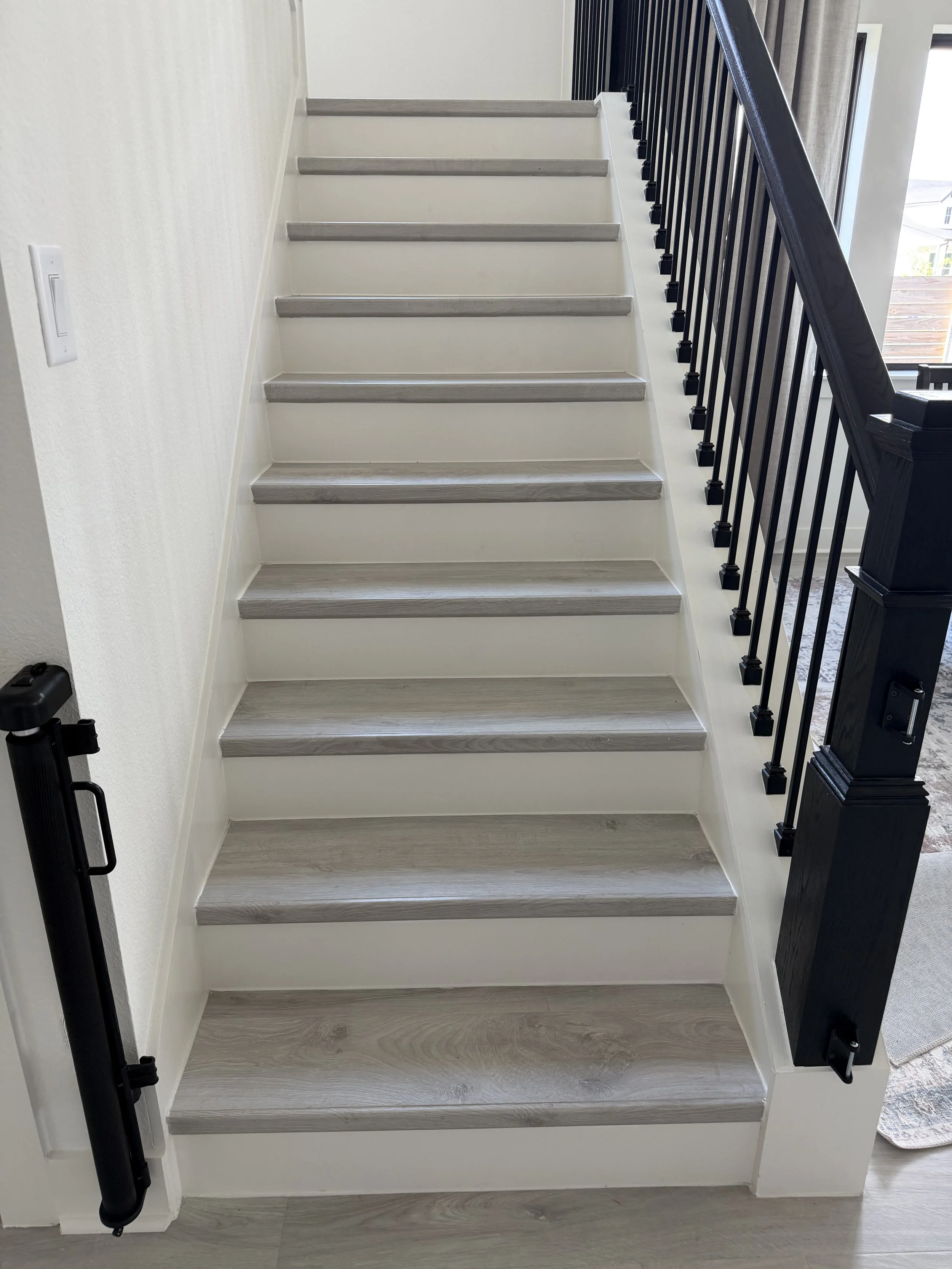
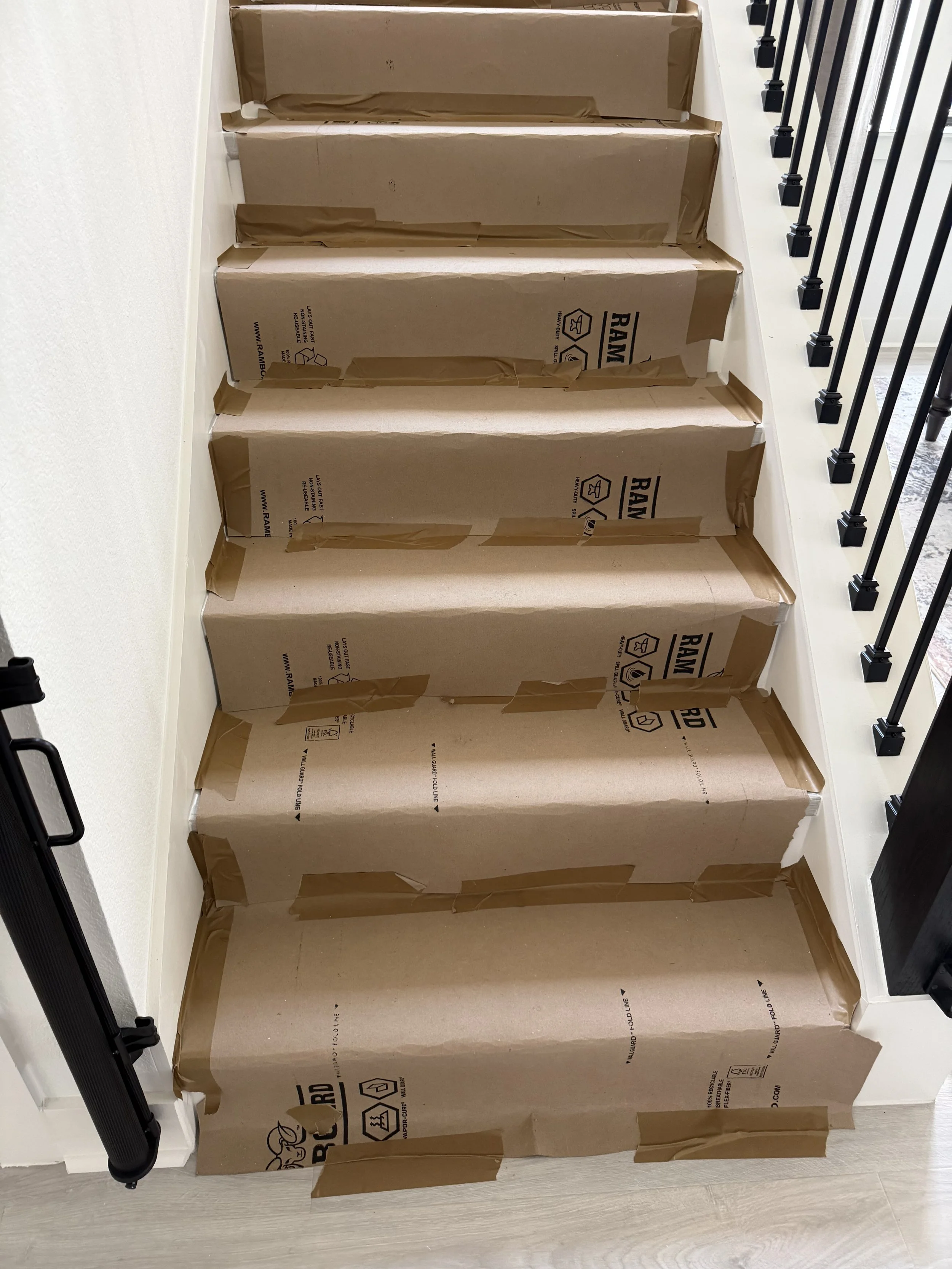
Before the heavy part of the move begins, we prepare the treadmill and the areas of the home that may need protection.
That can include floors, stairs, walls, railings, doorways and other surfaces along the moving path.
We’re not just thinking about whether the Peloton will fit.
We’re thinking about what it could come into contact with along the way.
5. Move Without Rushing
Once the equipment is ready, our technicians move it using the plan established for that particular home.
This is where patience matters.
If we need to stop, reposition, change our approach or remove another component, we do it.
Saving a few minutes isn’t worth turning a controlled move into an unnecessary risk.
6. Protect and Secure the Equipment for Transportation
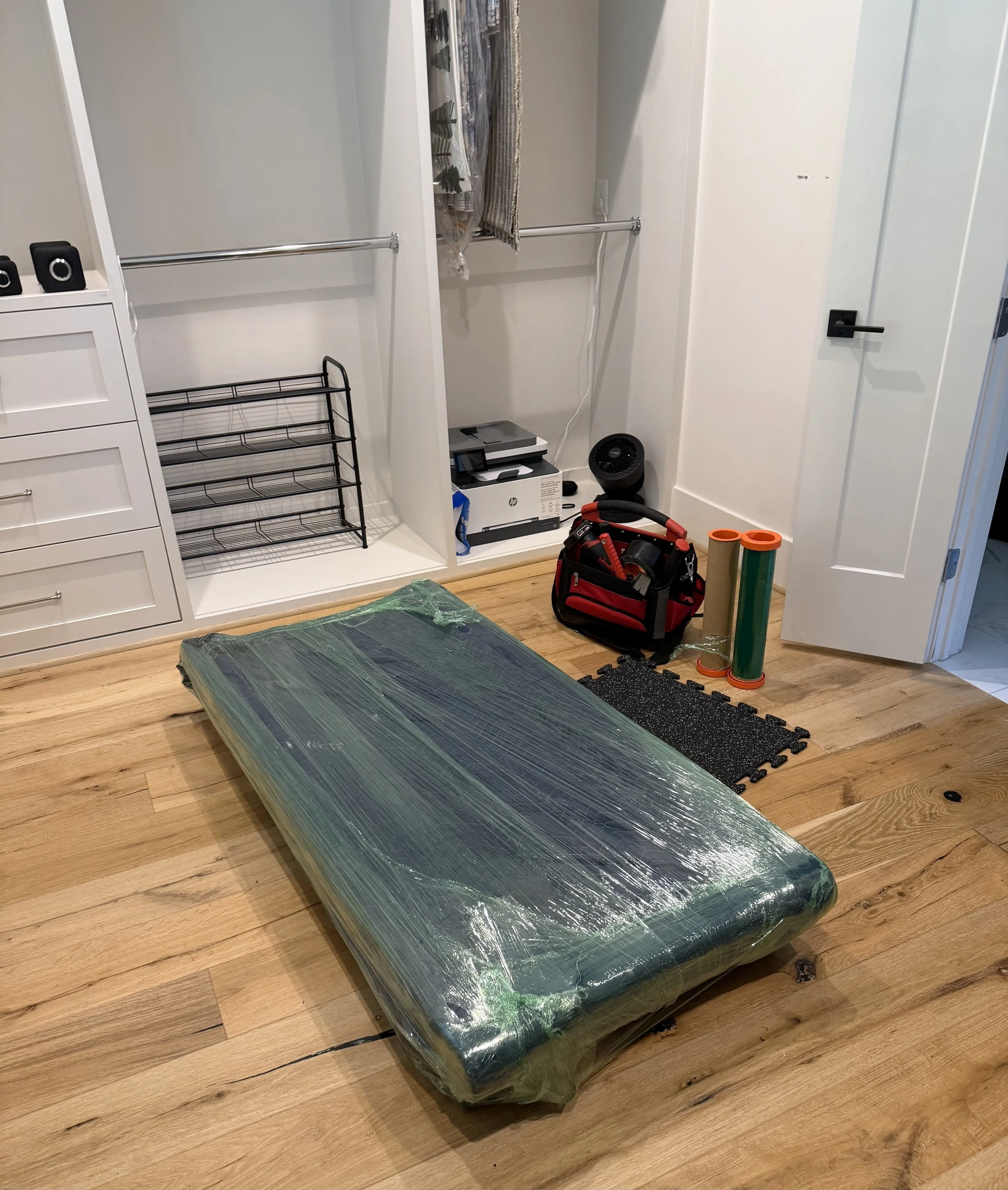
Peloton Tread running deck protected with moving blankets and plastic wrap before relocation.
For moves between properties, getting the Peloton out of the first home is only half of the project.
The treadmill still needs to be protected, loaded and secured appropriately for transportation to the destination.
We remain responsible for the equipment throughout that process rather than treating transportation as the part between disassembly and reassembly that doesn’t matter.
7. Reassemble and Position the Peloton
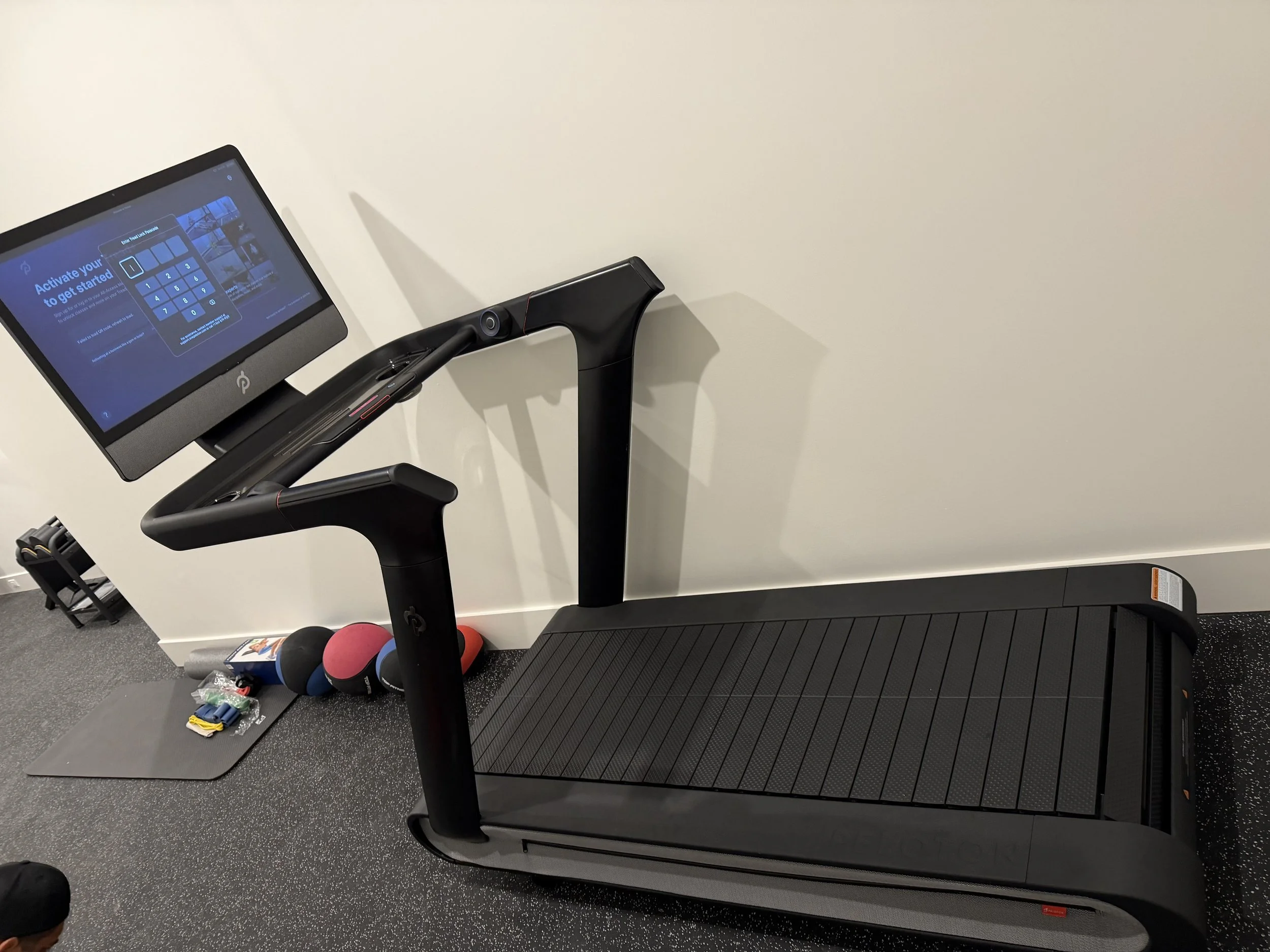
Peloton Tread Plus tested after relocation from 2nd floor to 2nd floor home.
At the destination, we bring the equipment to its final location and reassemble the components that were removed for the move.
We want the treadmill positioned where the customer intends to use it—not simply left in the room because the difficult part of the move is over.
8. Test It Again
Finally, we perform our post-move checks.
We compare the equipment’s operation with what we observed before the relocation and make sure the treadmill is ready for the customer to use.
That’s what we consider a complete Peloton relocation.
Not simply getting a heavy treadmill from Point A to Point B, but taking responsibility for the equipment throughout the entire process.
Looking for Peloton Treadmill Movers in Houston?
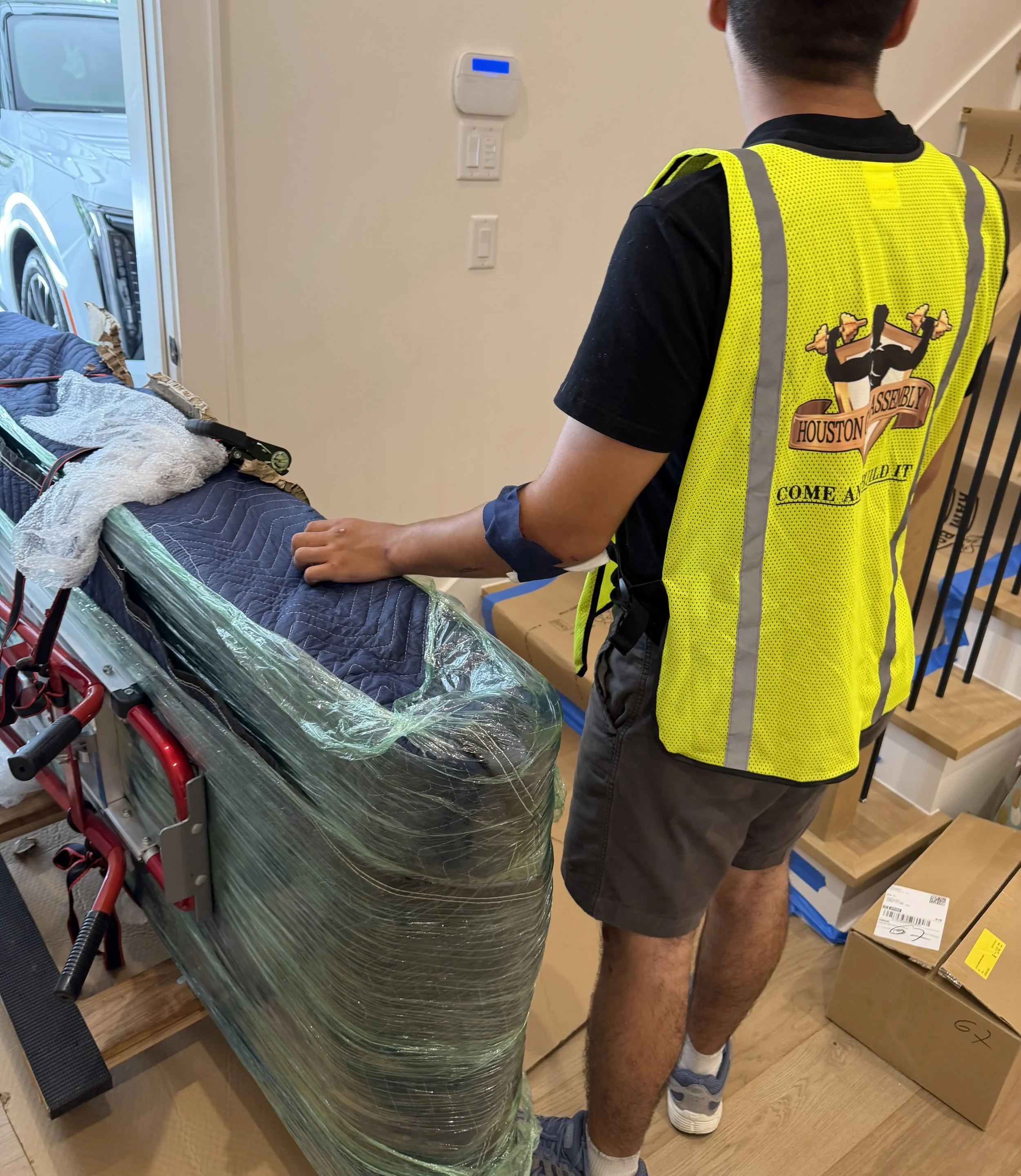
Houston Gym Assembly technician mentally preparing himself before moving a Peloton Tread Plus upstairs.
Houston Gym Assembly specializes in the disassembly, moving, transportation and reassembly of Peloton treadmills and other heavy fitness equipment throughout the Greater Houston area.
Whether you’re moving a Peloton Tread or Tread+ across the room, downstairs, upstairs or to another home, our goal is the same: protect the equipment, protect the property and complete the relocation without rushing the process.
We’re a local Houston fitness equipment company. When you contact us, you’re working directly with the company responsible for your project—from evaluating the move and scheduling the appropriate crew to the final reassembly and testing of your equipment.
What Should I Send for a Peloton Moving Quote?
The more we know about the move beforehand, the better we can prepare for it.
When requesting a quote, it helps to send us:
A photo of the Peloton
The pickup and delivery ZIP codes
Which floors the treadmill is currently on and where it is going
Photos of any staircases, landings or tight turns
Information about elevators when applicable
Any unusual access conditions we should know about
Don’t worry if you aren’t sure whether you have a Peloton Tread or Tread+. A few photos can usually give us the information we need to start evaluating the project.
Your Peloton Should Arrive Ready to Use
Moving a Peloton isn’t just about getting several hundred pounds from one location to another.
It’s about knowing how to take the equipment apart when necessary, controlling it through the difficult portions of the move, protecting the homes it travels through, transporting it appropriately, putting it back together and verifying that it operates as expected afterward.
That’s the standard we bring to every fitness equipment relocation.
If you’re planning a Peloton Tread or Tread+ move in the Houston area, contact Houston Gym Assembly and send us the details of your project. We’ll take it from there.

Bryan Mendes — Owner, Houston Gym Assembly
Bryan Mendes is the owner of Houston Gym Assembly and specializes in professional fitness equipment assembly, disassembly, and relocation throughout the Houston area. His team works with treadmills, ellipticals, functional trainers, Smith machines, power racks, and complete home and commercial gym setups.